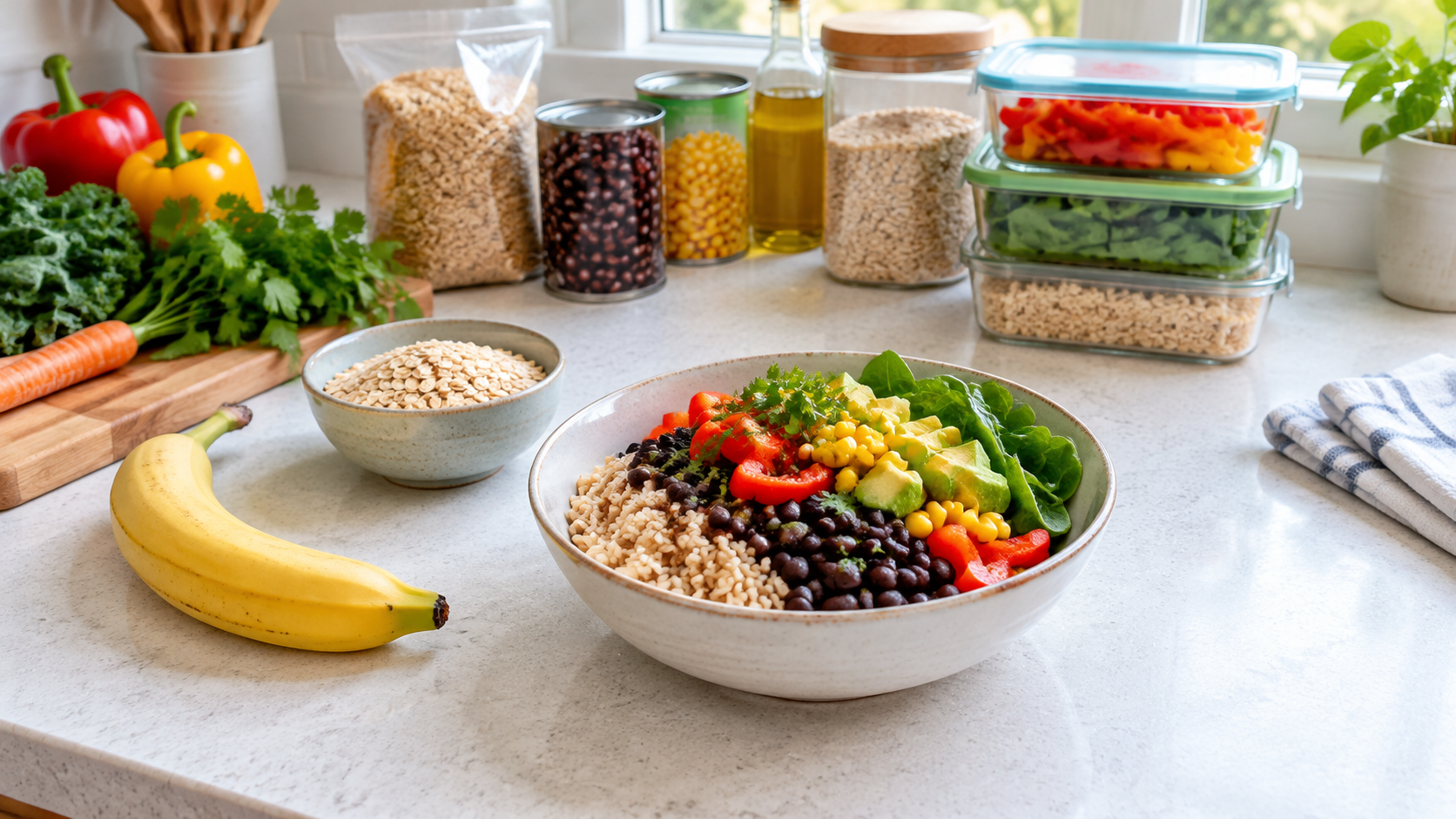
Healthy eating on a budget starts with food you can afford, store safely, and actually use. You do not need a perfect meal plan or a kitchen full of special products. If you are rebuilding a routine, working changing shifts, or sharing a refrigerator, a few repeatable meals can be more useful than an ambitious shopping list.
The goal is simple: make the next meal easier without spending money meant for housing, transportation, or bills. These five habits give you a practical starting point.
1. Plan healthy eating on a budget around three meals
Before shopping, choose one breakfast, one lunch, and one dinner you would willingly eat more than once. Check your shelf and refrigerator first. Then write down only what is missing.
For example, breakfast could be oatmeal with a banana and peanut butter. Lunch could be a bean-and-rice bowl with vegetables. Dinner could be eggs, whole-grain toast, and a side of vegetables. These are examples, not a prescribed diet. Adjust them for allergies, preferences, and any advice from your own healthcare professional.
Pick ingredients that work in more than one meal. Frozen vegetables can go into rice, eggs, or soup. Beans can become a bowl, a wrap, or an addition to a stew. USDA’s meal-preparation guidance recommends simple menus and stretching recipes with ingredients such as beans and vegetables.
2. Compare the cost you will actually use
A large package is not a bargain if half of it spoils or there is no room to store it. Compare unit prices on the shelf, such as price per ounce, rather than package prices alone. Then ask whether you can use or freeze the amount you are buying.
USDA’s Shop Smart guide identifies beans, peas, and lentils as low-cost protein options. It also explains that frozen and canned produce can be nutritious choices, rather than second-best substitutes for fresh food. Look for vegetables without added sauces, and canned vegetables labeled low-sodium or no salt added.
Healthy eating on a budget also means giving groceries a place in your spending plan before checkout. If that part is difficult, start with our paycheck money basics guide. Your grocery limit should fit your actual take-home pay, not someone else’s menu.
3. Keep one easy backup meal
Some nights you will get home tired. Plan for that version of yourself too. Keep one meal available that takes little preparation: canned beans with microwave rice and vegetables, or whole-grain toast with eggs, for example.
Convenience is useful when it helps you eat food you already bought. Choose between dried and canned beans based on the time, equipment, and storage you have. Healthy eating on a budget does not require cooking every ingredient from scratch.
4. Make leftovers safe, not mysterious
Cooking extra can save another round of preparation, but food safety belongs in the plan. According to USDA’s leftovers guidance:
- Refrigerate perishable leftovers within two hours, or within one hour when the temperature is above 90°F.
- Divide large amounts into shallow containers so they cool quickly. Hot food can go directly into the refrigerator.
- Keep the refrigerator at 40°F or below. Use refrigerated leftovers within three to four days, or freeze them.
- Reheat leftovers to 165°F, checked with a food thermometer.
In a shared kitchen, write your name and the preparation date on each container. Agree on what is shared and what belongs to someone else. A labeled meal is easier to find and less likely to become an argument or a forgotten container.
5. Repeat what works before adding more
At the end of the week, ask two questions: what did I actually eat, and what did I throw away? Buy more of the first and less of the second. If breakfast worked but dinner did not, change dinner rather than replacing the whole plan.
Healthy eating on a budget is a daily-life skill, not a test of recovery or a replacement for care. Start with one dependable meal, a realistic grocery list, and safe storage. A plan you can repeat is the one worth keeping.